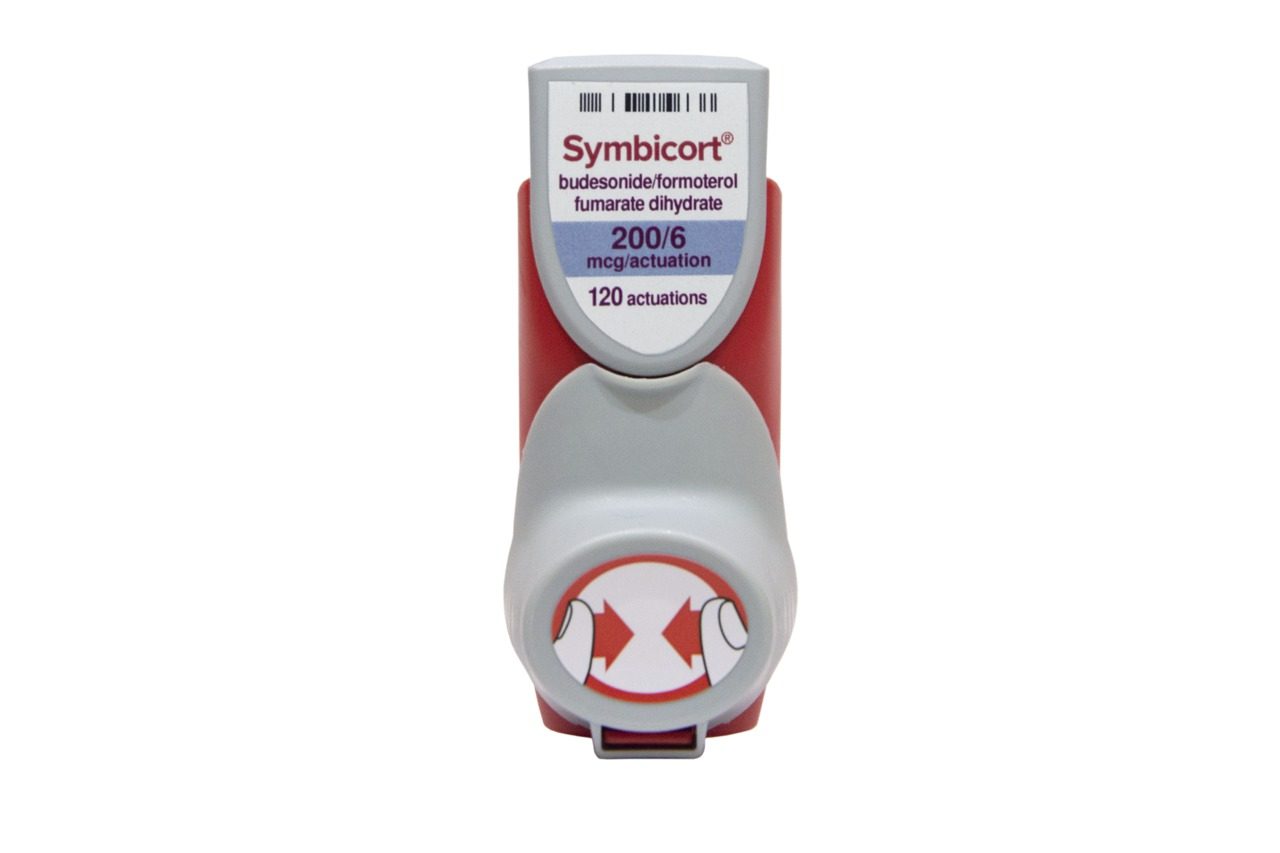

Symbicort Powder for Inhalation (Budesonide / Formoterol Fumarate Dihydrate) — Patient Guide (United Kingdom)
Symbicort is an inhaled medicine used to help control the symptoms of asthma and chronic obstructive pulmonary disease (COPD). It contains two active medicines: budesonide (an inhaled corticosteroid) and formoterol fumarate dihydrate (a long-acting bronchodilator of the LABA class).
This guide explains what Symbicort is, how it works, how to use it correctly, safety information, and practical tips. It is written for patients in the UK and uses general information available for this product.
1) Basic product information
| Feature | Details |
|---|---|
| Brand | Symbicort |
| Active ingredients | Budesonide + formoterol fumarate dihydrate |
| Medicine type | Inhaled corticosteroid (ICS) + long-acting bronchodilator (LABA) |
| Dosage forms | Powder for inhalation (device varies by pack) |
| Common uses | Asthma control; COPD symptom management (where indicated) |
| Typical setting | Long-term daily maintenance for airway inflammation and airflow |
2) How Symbicort works (mechanism of action)
Symbicort combines two complementary medicines:
- Budesonide: reduces airway inflammation. It helps calm swelling and irritation in the bronchial tubes, which can reduce wheezing, breathlessness and flare-ups over time.
- Formoterol: relaxes the muscles around the airways, helping them stay open. This improves airflow and makes breathing easier. Formoterol works relatively quickly compared with some other LABAs, while also providing longer symptom control.
Together, these help both inflammation (budesonide) and airway narrowing (formoterol).
3) Pharmacokinetics (what happens to the medicine in the body)
When you inhale Symbicort, medicine particles deposit in the lungs and a smaller portion is swallowed. The overall effects are mainly local in the airways, but a portion is absorbed into the body.
- Absorption: inhaled budesonide and formoterol enter the bloodstream after lung absorption and, to a degree, after swallowing.
- Distribution: the medicines distribute through the body; they bind to plasma proteins and reach target tissues.
- Metabolism: budesonide is largely metabolised by the liver (mainly via CYP3A enzymes). Formoterol is also metabolised, with several pathways involved.
- Excretion: metabolites are cleared primarily through the kidneys (urine) and partly through other routes.
In everyday terms, the most important point for patients is that Symbicort is designed for inhaled local action, while liver metabolism can matter for certain drug interactions. If you have liver disease or take interacting medicines, your clinician may monitor you more closely.
4) Typical use in the UK (indications)
Symbicort is used for the management of:
- Asthma: as maintenance treatment to control symptoms and reduce the risk of flare-ups.
- COPD: to improve symptoms and help reduce exacerbations in patients where an inhaled corticosteroid/long-acting bronchodilator combination is appropriate.
The exact way Symbicort is used (including whether it is used as a reliever in some asthma regimens) depends on the specific product strength and your individual care plan. Always follow the instructions provided with your inhaler and by your healthcare professional.
5) Timing and how to fit Symbicort into your day
Symbicort is usually taken regularly to maintain control of symptoms. Many patients take it twice daily (morning and evening).
- Consistency matters: try to use it at roughly the same times each day.
- Relief vs control: while formoterol can provide quicker symptom improvement for some people, the anti-inflammatory effect of budesonide typically builds over days.
- Do not “double up”: if you miss a dose, follow the advice on the medicine label or patient instructions. Do not take extra doses unless instructed.
If your symptoms worsen unexpectedly (e.g., increasing breathlessness, frequent waking at night, or increased need for fast-relief inhalers), seek medical advice promptly.
6) Food interactions
Symbicort is inhaled, so food interactions are generally not a major concern. Swallowed portions may occur, but typical meals are not expected to significantly affect the medicine’s performance.
As with many inhaled therapies, the most important factor affecting results is correct inhaler technique and regular use.
7) Alcohol and medicine interactions
Alcohol
There is no well-known direct “must avoid” interaction between alcohol and Symbicort for most patients. However, alcohol can worsen breathing for some people and may affect asthma/COPD symptoms indirectly. If you notice that alcohol triggers or worsens your symptoms, consider limiting intake and discuss this with your clinician.
Other medicines (important interactions)
Interactions can affect how well Symbicort works or increase side effects. Tell your healthcare professional about all medicines you take, including over-the-counter products and herbal remedies.
- Beta-blockers (including some eye drops for glaucoma): may reduce bronchodilator effect and can be risky in asthma. Examples include propranolol and other non-selective beta-blockers.
- CYP3A inhibitors: may increase budesonide levels (e.g., some antifungal medicines such as ketoconazole, and certain antibiotics like clarithromycin). Your clinician may adjust treatment or monitor you.
- Other long-acting or short-acting bronchodilators: taking multiple bronchodilators can increase the chance of side effects such as palpitations. Fast-relief inhalers are often used alongside Symbicort, but the plan matters.
- Diuretics (“water tablets”) and some other medicines that lower potassium: formoterol can potentially contribute to changes in potassium, especially if you also take drugs that lower potassium. This is more relevant in higher doses or in patients at risk.
- Monoamine oxidase inhibitors (MAOIs) or tricyclic antidepressants: may increase cardiovascular effects in combination with formoterol.
If you’re unsure whether a medicine interacts with Symbicort, ask a pharmacist. Always read the patient information leaflet supplied with your inhaler.
8) Dosing: strengths, schedule, and general principles
Symbicort comes in different strengths (the number of micrograms of budesonide and formoterol per actuation is written on the pack). Your prescribed strength and schedule depend on your diagnosis (asthma or COPD), symptom severity and past treatment.
General dosing approach
- Asthma: maintenance dosing is typically in the morning and evening. Some asthma regimens use Symbicort as a maintenance inhaler and may also include use for relief according to specific product guidance.
- COPD: maintenance dosing is usually twice daily, with adjustments based on symptoms and exacerbation history.
What to do if symptoms change
Do not change the dose on your own. If you need treatment more often than usual, or you are using rescue medication frequently, this may indicate poor control and requires review.
Missed dose guidance (general)
If you miss a dose, use it when you remember unless it is close to the time for your next dose. Do not take extra inhalations to make up for a missed dose unless your healthcare professional has advised this.
9) Safety profile: what to watch for
Most people tolerate Symbicort well when used correctly. As it contains an inhaled corticosteroid and a bronchodilator, side effects are possible—especially at higher doses or if technique is incorrect.
Common or expected effects
- Throat irritation or hoarseness
- Oral thrush (candidiasis)—more likely if you don’t rinse and spit after use
- Cough or mouth dryness
- Mild headache
Possible dose-related effects (seek advice if persistent or severe)
- Palpitations or fast heartbeat (formoterol effect)
- Tremor
- Restlessness
- Muscle cramps (less common)
Systemic corticosteroid concerns
Because budesonide is inhaled, systemic effects are generally lower than with oral steroids, but long-term high dosing may increase the risk of effects such as:
- adrenal suppression (rare at typical inhaled doses but a consideration)
- reduced bone density (especially with long-term higher doses)
- cataracts or glaucoma (risk may increase with prolonged steroid exposure)
- growth effects in children (important to monitor)
Your clinician will aim for the lowest effective dose that maintains good control.
When to get urgent help
Get urgent medical help if you experience signs of a severe allergic reaction (such as swelling of the face/lips, difficulty breathing, or hives), or if you have rapidly worsening breathing that does not respond to your rescue treatment.
10) Practical use tips for the powder inhaler
Correct technique is crucial for Symbicort to work properly. Different powder inhaler devices have specific steps. Use the instructions provided with your inhaler and practise with a healthcare professional if you’re unsure.
General steps (commonly applicable concepts)
- Prepare: open/load the device or prepare the dose as instructed for your specific Symbicort powder inhaler.
- Breathe out fully away from the mouthpiece.
- Seal lips around the mouthpiece.
- Inhale forcefully and steadily: powder inhalers generally rely on your inspiratory flow to deliver medicine to the lungs. If you do not inhale strongly enough, less medicine reaches your airways.
- Hold your breath for as long as comfortable (often about 5–10 seconds), then breathe out slowly.
- If you use a second dose, repeat steps for the next inhalation.
- Rinse your mouth and spit after use (even if you don’t have symptoms). This reduces the risk of oral thrush and hoarseness from the corticosteroid component.
Signs your technique may be off
- you frequently need rescue inhaler more than expected
- no improvement in symptoms after consistent use
- you notice repeated thrush or persistent hoarseness
If any of these apply, ask a pharmacist or nurse to check your inhaler technique.
11) Missed dose, storage, and device care
- Storage: keep the inhaler in the original packaging and protect it from moisture and heat as directed on the pack.
- Keep it dry: powder inhalers should not be exposed to dampness; close the device properly after use.
- Check expiry: do not use past the expiry date on the carton or device.
- Clean mouthpiece: if the device instructions allow, follow cleaning guidance. Avoid using water inside the powder chamber unless instructions specify it.
12) Alternative options (what else may be used)
Alternatives depend on whether you have asthma or COPD, and on how well your symptoms are controlled. Common options include:
- Other ICS/LABA inhalers: different combinations of inhaled corticosteroid and long-acting bronchodilator.
- Inhaled corticosteroid alone (ICS): may be used in some asthma plans.
- Long-acting bronchodilator (LABA or LAMA) for COPD: often used either alone or in combination depending on symptoms.
- Reliever medicines (short-acting bronchodilator): used for quick relief of sudden symptoms, separate from maintenance therapy.
- Nebulised therapies or other delivery devices in specific circumstances.
Your healthcare professional can recommend the most appropriate alternative based on your condition, inhaler preferences, and risk profile.
13) UK market and legal context (overview)
In the UK, inhaled medicines such as Symbicort are supplied as part of respiratory disease management and are regulated to meet safety, quality and manufacturing standards. Symbicort is typically presented with a patient information leaflet and device instructions, and its use should follow nationally recognised treatment pathways for asthma and COPD.
Recommendations in the UK may reference guidance such as:
- Asthma: guidance such as NICE recommendations and the British Thoracic Society (BTS)/Scottish Intercollegiate Guidelines Network (SIGN) strategy documents.
- COPD: guidance such as NICE recommendations for diagnosis and management.
These guidelines aim to optimise symptom control while minimising risks from inhaled steroids.
14) Recent guidance themes (what clinicians commonly emphasise)
While specific product recommendations can vary, recent UK clinical emphasis has included:
- Inhaler technique checks at regular reviews
- Using the lowest effective dose to maintain control
- Assessing adherence and ensuring patients understand maintenance vs reliever roles
- Regular review after symptom changes or exacerbations
- Monitoring for corticosteroid side effects (especially in long-term/high-dose use)
15) Delivery and availability (online pharmacy)
Symbicort powder inhalers are commonly available through UK pharmacies and online pharmacy services, depending on stock and the specific strength/device type. Delivery availability can vary by postcode and service level.
- Stock status: may change; check the product page for current availability.
- Packaging: medicines are typically shipped in protective packaging suitable for transport.
- Delivery times: vary by carrier and delivery option selected at checkout.
If you need help choosing the correct strength or device type (powder inhaler variants differ), contact customer support or a pharmacist.
16) FAQ
What is Symbicort used for?
Symbicort (budesonide/formoterol) is used to manage asthma and COPD by reducing airway inflammation and helping keep airways open.
How quickly will Symbicort start working?
Some people notice breathing improvement relatively quickly because formoterol can act fast. However, budesonide’s anti-inflammatory effect may take longer—often days—to fully develop. If you feel it’s not working, check inhaler technique and discuss your symptoms with a healthcare professional.
Do I need to rinse my mouth after using Symbicort?
Yes. Rinse your mouth and spit out after each dose to reduce the risk of thrush and hoarseness from the inhaled steroid.
Can I drink alcohol while using Symbicort?
Most patients can drink alcohol in moderation without a direct interaction. However, alcohol may worsen breathing symptoms for some people—if you notice this, reduce intake and seek advice.
What should I do if I forget a dose?
Use it when you remember unless it’s close to the next dose. Do not take extra doses to make up for a missed one unless advised by your clinician or the medicine leaflet.
What are the common side effects?
Common issues include hoarseness, throat irritation, and oral thrush. More dose-related effects may include palpitations or tremor. Seek advice if symptoms are persistent, severe, or worsening.
Is Symbicort safe for long-term use?
Many patients use Symbicort long term as part of asthma or COPD management. Clinicians aim for the lowest effective dose and monitor for potential inhaled steroid effects. Do not stop suddenly without medical advice.
Can Symbicort replace my reliever inhaler?
In some asthma treatment plans, Symbicort regimens may include specific use for relief, but in many cases you will still be given a separate fast-relief inhaler. Follow your personalised treatment plan and the instructions on your inhaler/leaflet.
How do I know if my inhaler technique is correct?
If you have trouble controlling symptoms or you repeatedly get thrush/hoarseness, your technique may need review. Ask a pharmacist or nurse to observe how you use the device.
Who should take extra care when using Symbicort?
People with heart conditions, high blood pressure, diabetes, thyroid problems, low potassium, or liver impairment should use caution and be monitored. Always review your medical history with your healthcare professional.
Where can I find the full safety information?
The patient information leaflet included with your pack contains complete safety details, contraindications, and warnings. If you have questions, speak to a pharmacist.
Important: Symbicort is an inhaled controller medicine. If you are concerned about worsening symptoms, or if you need emergency help, seek urgent medical attention.